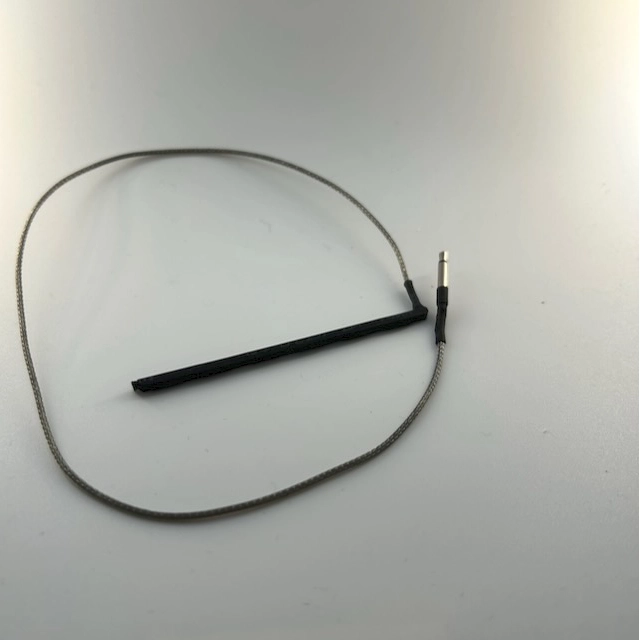
How piezo under saddle pickups work. OK we don’t often offer piezo stuff but that doesn’t mean we can’t talk about it. It’s guitar stuff after all. So here’s a few words about those weird little strips that make a bunch of noise.
A piezo under-saddle pickup is a fascinating piece of technology. It allows acoustic guitars to be amplified without the need for a microphone. It relies on the piezoelectric effect. A property of certain materials that generate an electrical charge when subjected to pressure or mechanical stress. This stress comes from the vibrations of the strings and the movement of the saddle.
How It Works
The pickup itself is a thin strip of piezoelectric material. Often a type of ceramic or crystal, that sits directly underneath the saddle of the guitar. The saddle is the piece that the strings rest on. Every time you pluck or strum a string, the vibration is transferred through the saddle and into the piezo strip.
Now, here’s where the magic happens. The pressure from the vibrating saddle compresses the piezo material at a microscopic level. Due to the piezoelectric effect, this compression generates an electrical signal. This signal corresponds to the frequency and intensity of the vibrations. The harder you pluck a string, the greater the pressure changes, and the stronger the electrical signal produced.
This raw electrical signal is usually very weak, which is why most piezo systems are paired with a preamp. The preamp boosts the signal to a usable level. It often provides tone-shaping options such as volume, bass, and treble controls as well. This amplified signal can then be sent to an amplifier, PA system, or recording interface.
Why Use a Piezo Pickup?
The beauty of a piezo pickup is that it captures the sound of the strings directly. It doesn’t capture ambient sound like a microphone would. This makes it incredibly useful for live performances, where feedback from microphones can be an issue. Since the pickup sits under the saddle, it also captures the resonance of the guitar’s body,. That helps adding warmth and depth to the tone.
Another advantage of piezo pickups is that they work well in noisy environments. Microphones can pick up unwanted background noise. A piezo pickup is isolated within the guitar and only responds to direct vibrations. This makes it a great choice for gigging musicians who need a reliable and feedback-resistant amplification method.
Piezo Tone Characteristics
One thing to note is that piezo pickups have a distinct tonal character. They emphasize high-end clarity and articulation, making them excellent for cutting through a mix. Some players find them too bright or “quacky,” especially when played through a full-range PA system. This is why many acoustic guitars with piezo systems include onboard EQ controls or blend them with an internal microphone to achieve a more natural sound. Piezo under-saddle pickups are an efficient, feedback-resistant, and durable solution for amplifying acoustic guitars. By harnessing the piezoelectric effect, they provide a clear and articulate representation of your guitar’s sound. This makes them an essential tool for live performers and recording musicians alike. And that’s folks is how under saddle piezo pickups work.
Or more formally entitledThe Anatomy and Function of Electric Guitar Pickups.
Or The is not Magic, its just a bit of basic science.
Electric guitar pickups are the heart and soul of your instrument’s sound. Responsible for capturing the vibrations of the strings and converting them into electrical signals that can be amplified and modified. Understanding the design, components, and workings of pickups is useful for any guitarist, luthier, or music enthusiast looking to explore the intricacies of electric guitar tone. In this bit of blurb, we will look into how electric guitar pickups are designed, their key components, and the basic ( not rocket )science behind how they produce sound.
How guitar pickups work. Warman Texas Triple Hots
1. What is an Electric Guitar Pickup?
At its core, an electric guitar pickup is a type of transducer—a device that converts one form of energy into another. Pickups convert the mechanical energy of vibrating guitar strings into electrical energy. This energy can then be amplified and manipulated. This conversion process is the foundation of how electric guitars produce sound.Pickups are critical in defining the guitar’s tone, character, and sonic capabilities.
2. Key Components of Electric Guitar Pickups
Understanding how electric guitar pickups work requires a quick look at their main components:
a. Magnets
Magnets are the central element of any pickup, creating the magnetic field necessary for inducing electric current. The most common types of magnets used in pickups are Alnico (an alloy of aluminum, nickel, and cobalt) and ceramic. Alnico magnets, especially Alnico II and Alnico V, are known for their warm, vintage tone and have been a staple in pickups since the early days of electric guitars. Ceramic magnets, on the other hand, are typically stronger and are known for producing brighter, more aggressive tones.
b. Coils of Wire
A pickup coil consists of thousands of turns of thin copper wire wrapped around a bobbin or a central core. The number of windings and the gauge of the wire can significantly affect the pickup’s tonal characteristics. More windings increase the output and enhance the midrange frequencies, leading to a thicker sound. The wire used is insulated with a coating to prevent short circuits and keep the integrity of the signal.
c. Pole Pieces
Humbucker pole pieces can be cylindrical metal rods, or screws or solid bars positioned underneath each string. They focus and direct the magnetic field created by the magnets. The height and material of these pole pieces can, dependant on the pickup design, be adjusted to balance the output of each string, catering to the tonal preferences of the player.
In single-coil pickups, each pole piece is either a solid magnet rod or a steel rod that connects to a bar magnet on the pickups base. These usually aligns directly under a string, ensuring each string has a strong magnetic field around it. Its not uncommon though for solid steel bars to be used ointment place of individual magnet poles.
d. Base Plate and Cover
The base plate, typically made from metal, acts as support for the pickup components. Some pickups also have a metal cover for aesthetic purposes and to protect the internal components. Covers can subtly affect the pickup’s tone, often slightly softening high frequencies. Some pickup designs use covers to control noise and shield the pickup from electromagnetic interference.
e. Wiring and Output Leads
Wiring is pretty important for transmitting the electrical signal generated by the pickup to the guitar’s electronics (volume and tone controls) and eventually to the output jack. Output leads are typically shielded to prevent unwanted noise and interference from external sources, ensuring the cleanest possible signal.
3. Types of Electric Guitar Pickups
There are two main types of electric guitar pickups, each with distinct characteristics:
a. Single-Coil Pickups
Single-coil guitar pickups are the original and most straightforward pickup design, featuring a single coil of wire wrapped around a magnet or set of magnets. They are known for their bright, clear, and crisp tone, with a high level of sensitivity to string dynamics. This sensitivity allows single-coil pickups to capture a wide range of nuances in a player’s technique.They are also prone to electromagnetic interference, which can result in a 60-cycle hum or buzz, especially in high-gain settings.
b. Humbucker Pickups
Developed to sort out the noise issue common with single-coils, humbuckers use two coils wound in opposite directions and with reversed magnetic polarity. This design cancels out much of the electromagnetic interference, reducing hum and noise, hence the name “humbucker.” The tone produced by humbuckers is typically thicker, warmer, and has more output than single-coils. This makes them popular in rock, metal, and jazz genres where a fuller sound and higher gain are desired.
4. How Pickups Produce Sound
The process by which electric guitar pickups produce sound is based on electromagnetic induction, a fundamental principle of physics discovered by Michael Faraday in the 19th century. Here’s how it works in the context of guitar pickups:
String Vibration: When a guitarist plucks or strums a string, it vibrates. The vibration of the metal string disrupts the stable magnetic field generated by the pickup’s magnet.
Magnetic Field Disturbance: As the metal string moves through the magnetic field, it induces a variation in the magnetic flux around the coil of wire. This flux change is a form of energy transfer from the string to the coil.
Electromotive Force (EMF): The variation in magnetic flux induces an electromotive force (EMF) in the coil according to Faraday’s law of electromagnetic induction. This induced EMF causes an electric current to flow in the coil, generating an alternating current (AC) that mirrors the string’s vibration.
Signal Transmission: The AC signal generated by the coil is a weak electrical current that travels through the guitar’s internal wiring to the output jack. This signal is then sent to an amplifier, where it is boosted and converted back into sound by a speaker.
Sound Production: The amplifier reproduces the sound characteristics of the vibrating strings. The tone, sustain, and other qualities are shaped by the pickup’s construction, including magnet type, coil winding, and other factors. Adjusting volume and tone controls on the guitar modifies the signal’s characteristics before amplification, allowing for further tonal shaping.
5. Factors Influencing Pickup Sound – again its not magic
Lots of factors influence the sound produced by a pickup. Some of the most significant include:
Magnet Type and Strength: Alnico and ceramic magnets impart different tonal qualities. Stronger magnets tend to produce higher output and more focused sound, while weaker magnets result in softer, vintage-like tones.
Coil Winding: The number of wire windings affects the pickup’s output level and tonal balance. More windings increase output and midrange frequencies, resulting in a fuller sound, while fewer windings can offer a clearer, brighter tone.
Pole Piece Material and Configuration: Different materials and configurations of pole pieces can alter the magnetic field and the pickup’s tonal characteristics. Adjustable pole pieces allow players to fine-tune the balance of individual string outputs.
Pickup Position: The location of the pickup on the guitar body (near the bridge, middle, or neck) significantly affects the sound. Bridge pickups capture sharper, brighter tones with higher frequency content, while neck pickups produce warmer, deeper tones due to their position near the string’s vibrating midpoint where oscillations are greatest.
6. So that’s how guitar pickups work
Electric guitar pickups are basic engineering, relying on fundamental principles of magnetism and electronics to capture and amplify the sounds of vibrating strings. Their design, components, and construction directly influence the character and quality of the sound produced.
Whether a guitarist seeks the bright clarity of a single-coil, the warm, full-bodied tone of a humbucker, or the modern versatility of active pickups, understanding the role of pickups is key to shaping the perfect tone.
As technology continues to advance, the evolution of pickup design will undoubtedly offer new sonic possibilities, inspiring musicians to explore and create ever more diverse soundscapes.
This article was written by Josi Warman, founder of Warman Guitars. With over 40 years of experience building guitars, designing pickups, creating custom wiring systems and publishing guitar-building guides, Josi has helped thousands of players upgrade and customise their instruments.
So here’s todays ramblings on how to do some basic wiring up stuff. A fairly simple arrangement of 2 pickups – a neck and bridge – with a there way switch ( both 8 lug lever witch and 3 way toggle switch variants ) with a master volume and tone control.
The diagrams show this done with 2 single coils but the principle is the same for 2 humbuckers but you might want to swap the 250k pots for 500k pots just to let a bit more of the treble through.
As with all pickup wiring the hot / plus / positive – whatever you want to call them – leads go to the switch lugs and the ground / negative / earth leads connect up into the common earth circuit, which also hooks into the bridge earth wire otherwise it’ll hum like billyoh when you aren’t touching the strings.
The Warman twin coil humbuckers all pretty much follow the same wire colour codes as follows.
Bare wire. This is the overall group wire for the pickup and needs to be connected to a common earth point on the guitar. Typically this is the back of a pot.
Black. This is the negative ( – ) wire of the first coil, sometimes called the start wire.
White. This is the positive ( + ) wire of the first coil, sometimes called the finish wire
Red. This is the negative ( – ) wire of the second coil. ( start )
Green. This is the positive ( + ) wire of the second coil ( finish )
To wire this up as standard humbucker with both coils i series. Connect black and bare to the back of one of the pots ( common earth circuit )
Leave red and white joined together , they come pre-soldered to each other . Wrap some insulation tape around this solder joint to avoid accidental shorting our of the coils when you stuff all the wires back into the guitar cavities.
Connect the green wire either to the input lug on you volume pot or the pickup selector switch, this will depend on how your guitar is wired and its control layout .
Single coils
Single coil pickups have just 2 wire coming out of them. This will either be a single twin core cable or two individual leads, depending on model. single cable versions have an inner and outer core to the wire, the inner is the hot wire and the outer is the ground / negative wire. If the pickup has two individual leads then one of these will be black, which is the ground wire, and the other coloured lead will be the hot wire.
Wiring up a 3 way mini toggle switch to act as pickup selector switch is really easy. It gives the option of bridge pickup, neck on its own or, in the mid position, both together. All it takes is wiring some jumper wires side to side across the switch lugs of the switch. Then connect the hot wire from the neck pickup to one end of the switch. Next connect the hot wire from the bridge to other end of the switch. Lastly wire a hot out wire from the centre connections to the connector for the tip of the jack socket. That’s it, job done. Easy guide to Wiring a pickup selector switch.
Only a small 6mm hole is needed to mount the switch through. You can usually find room to squeeze one in somewhere. These switches are also used as series, parallel, coil cut switches. This is explained here.
Warman DPDT 3 position on-on-on mini toggle guitar switch
We use cookies on our website to give you the most relevant experience by remembering your preferences and repeat visits. By clicking “Accept All”, you consent to the use of ALL the cookies. However, you may visit "Cookie Settings" to provide a controlled consent.
This website uses cookies to improve your experience while you navigate through the website. Out of these, the cookies that are categorized as necessary are stored on your browser as they are essential for the working of basic functionalities of the website. We also use third-party cookies that help us analyze and understand how you use this website. These cookies will be stored in your browser only with your consent. You also have the option to opt-out of these cookies. But opting out of some of these cookies may affect your browsing experience.
Necessary cookies are absolutely essential for the website to function properly. These cookies ensure basic functionalities and security features of the website, anonymously.
Cookie
Duration
Description
cookielawinfo-checkbox-analytics
11 months
This cookie is set by GDPR Cookie Consent plugin. The cookie is used to store the user consent for the cookies in the category "Analytics".
cookielawinfo-checkbox-functional
11 months
The cookie is set by GDPR cookie consent to record the user consent for the cookies in the category "Functional".
cookielawinfo-checkbox-necessary
11 months
This cookie is set by GDPR Cookie Consent plugin. The cookies is used to store the user consent for the cookies in the category "Necessary".
cookielawinfo-checkbox-others
11 months
This cookie is set by GDPR Cookie Consent plugin. The cookie is used to store the user consent for the cookies in the category "Other.
cookielawinfo-checkbox-performance
11 months
This cookie is set by GDPR Cookie Consent plugin. The cookie is used to store the user consent for the cookies in the category "Performance".
viewed_cookie_policy
11 months
The cookie is set by the GDPR Cookie Consent plugin and is used to store whether or not user has consented to the use of cookies. It does not store any personal data.
Functional cookies help to perform certain functionalities like sharing the content of the website on social media platforms, collect feedbacks, and other third-party features.
Performance cookies are used to understand and analyze the key performance indexes of the website which helps in delivering a better user experience for the visitors.
Analytical cookies are used to understand how visitors interact with the website. These cookies help provide information on metrics the number of visitors, bounce rate, traffic source, etc.
Advertisement cookies are used to provide visitors with relevant ads and marketing campaigns. These cookies track visitors across websites and collect information to provide customized ads.